20% Off Our Special January Collections. Discover

The Mega January Campaign Has Begun. Check Out the Products Now.

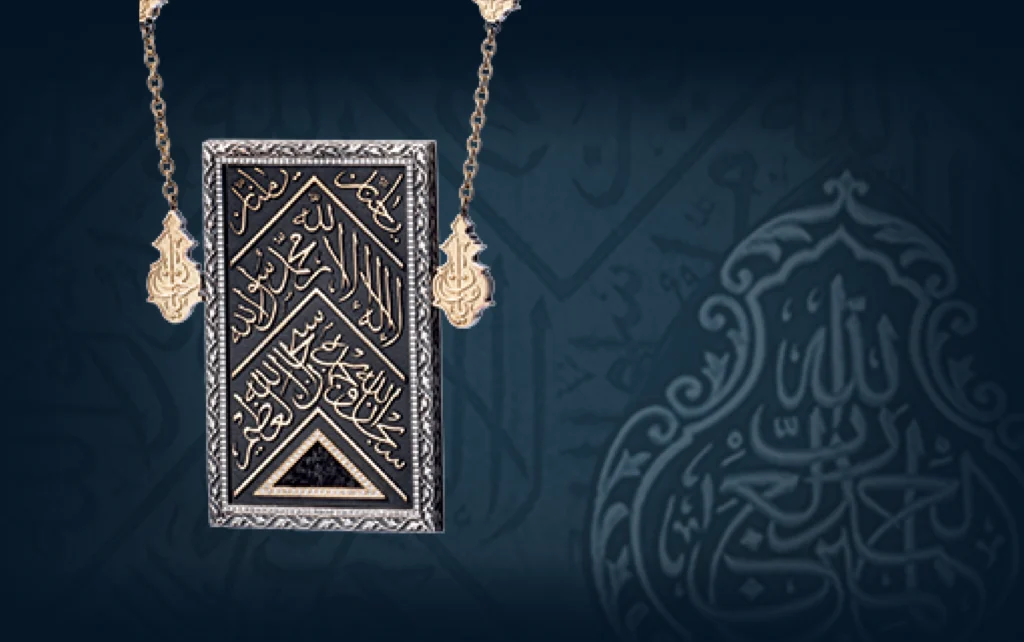
The Kaaba's Covered Jewels

An Interpretation of Historical Heritage and Timeless Craftsmanship with Gold and Diamonds

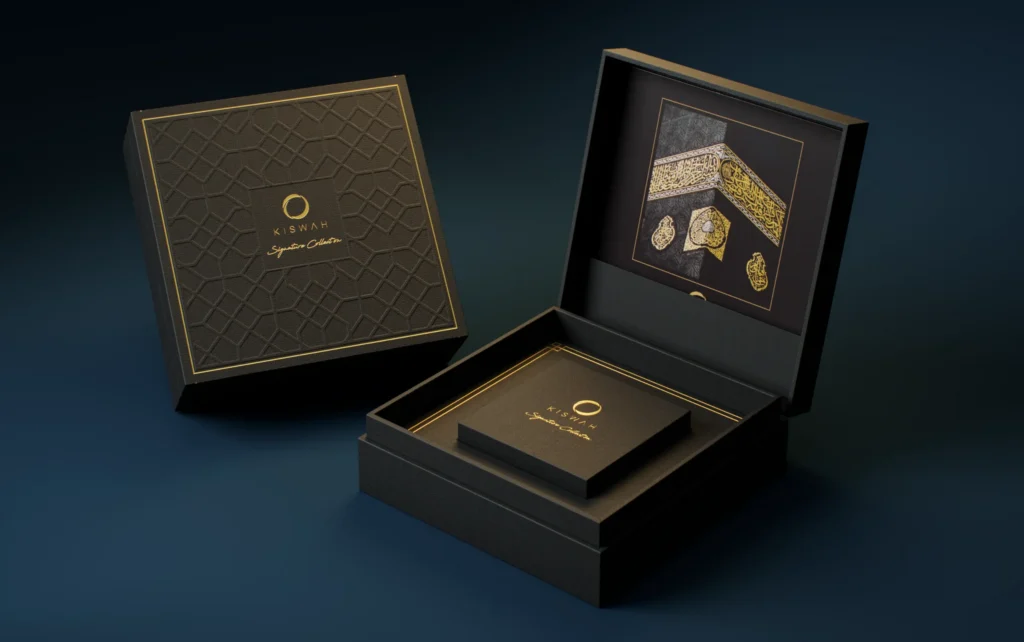
KAABA COVER COLLECTION

KISWAH aims to create enduring works that will be passed down from generation to generation, combining the cultural and spiritual touches of the past with today’s sophisticated splendor, thanks to its strong craftsmanship and artistic vision.


The Priceless Reflections of the First Sacred Heritage Built on Earth for Humanity

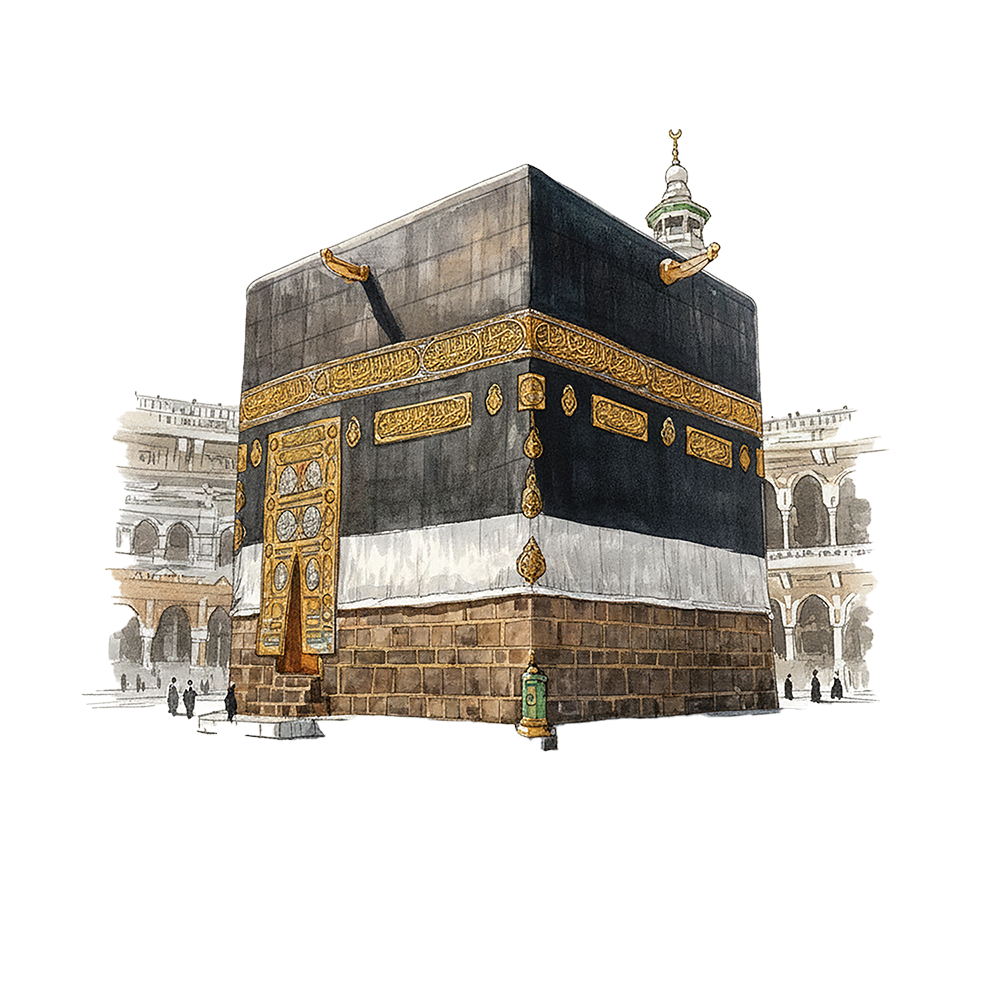
Muslims from all corners of the world gather each year around the Kaaba, the heart of Islam. Located within the boundaries of the Haram in Mecca, the Kaaba is not only “the House of God,” or “Baytullah,” but also the qibla, the direction toward which Muslims turn five times a day in prayer. The face of the Kaaba that greets us with all its splendor and charm is its kiswa, its covering. This black covering, which is just an ordinary fabric when touched on the loom, becomes the highly valued Kiswa-i Sharif for Muslims the moment it touches the ancient stones of the Kaaba. The story of the Kiswa-i Sharifa, the product of great self-sacrifice kneaded with love, is as deep and rich as the embroidery woven from pure silk. Woven from pure white silk dyed black, the Kiswa weighs over 650 kilograms.

KAABA

THE HISTORY OF THE COVER

The tradition of covering the Kaaba existed even before Islam. It is reported that the first person to cover the Kaaba was Kerb. B. Esad, one of the rulers of Yemen, and that the Prophet (pbuh) also covered the Kaaba with a Yemeni garment. (El-Ezraki, 1980; 1,255)

Hadith sources narrate that the Prophet (pbuh) covered the Kaaba three times. Some sources also mention that during the time of the Prophet (pbuh), the Kaaba was covered with a white cloth during Ramadan.

The powerful figures and important personalities of the time also left traces of themselves and their era on the Kaaba cloth, turning this sacred cloth into a religious, social, economic, and cultural inscription conveying specific periods of history.

Until the end of Abbasid rule, Kaaba coverings sent from Baghdad began to be woven in Egypt with the Mamluks (1263). The tradition of sending Kaaba coverings with “Mahmel” also first emerged during the Mamluk period.

Covering the Kaaba was seen as a sign that Muslim countries had a say in the holy lands. For this reason, there were major problems among the rulers of Muslim countries on this issue.

With the conquest of Egypt and the transfer of the caliphate to the Ottomans, Yavuz Sultan Selim continued to send the outer coverings of the Kaaba from Egypt due to its proximity to Mecca, while the inner coverings were sent from Istanbul along with the “Mahmel.”
One of the oldest examples that have survived to the present day was made during the reign of Yavuz Sultan Selim (1520-1512) and is now kept in Bursa Ulu Mosque.

One of the oldest examples that has survived to the present day was made during the reign of Yavuz Sultan Selim (1520-1512) and is now the Kaaba door covering displayed in Bursa Ulu
Mosque in Bursa.

Until the reign of Ahmed I during the Ottoman period, the Kaaba cover was woven in Egypt. During the reign of Ahmed I, it was woven in a workshop established in the courtyard of the Sultan Ahmed Mosque in Istanbul (1603-1617).

After that, Kaaba coverings woven in different periods in Egypt, Istanbul, and Bursa continued to be produced at the Hereke weaving factory, which was established in 1844.

During the Ottoman period, the red inner covering was last sent from Istanbul in 1861 by Sultan Abdülaziz on the occasion of his accession to the throne and was used at the Kaaba until 1936.

During World War I, when the Emir of Mecca, Sharif Hussein, rebelled against the Ottoman Empire, both coverings began to be sent from Egypt again.

When the administration of Mecca passed to the Saudis, the Kaaba cover continued to be woven in Egypt for a while. In 1927, the first Kaaba cover workshop was established in Mecca.
After this date, the Kaaba covers were woven in India for a few years, then again in Egypt.

In 1962, the weaving of Kaaba coverings in Egypt was discontinued, and they are now woven and produced in Mecca.

In the past, due to the harsh desert climate and the difficult mountainous terrain through which they were transported, a spare kiswa was always made in case of damage from fire, flood, or sandstorms during transport to Mecca.

Previously, each kiswa was changed two or three times a year because the Kaaba cover would tear and become damaged due to worshippers and weather conditions. Today, the outer black cover of the Kaaba is changed once a year. The inner covers of the Kaaba and the Ravza covers are changed every 30-20 years.

USE OF THE KAABA COVER

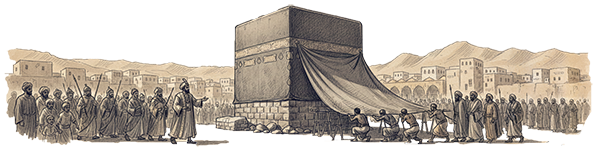
In accordance with Hajj traditions, every year on the ninth day of the month of Dhu al-Hijjah, the Kaaba is covered with a new kiswa, and the old covering is cut into pieces of various sizes and given as gifts to important figures.

During the conquest of Mecca, the Prophet (pbuh) gave the keys to the Kaaba to Osman b Talha and Shayba b. Osman for safekeeping. Therefore, the Kaaba coverings, which were changed at certain times in history, were given to the Beni Shayba family, who divided them into small pieces and sold them.
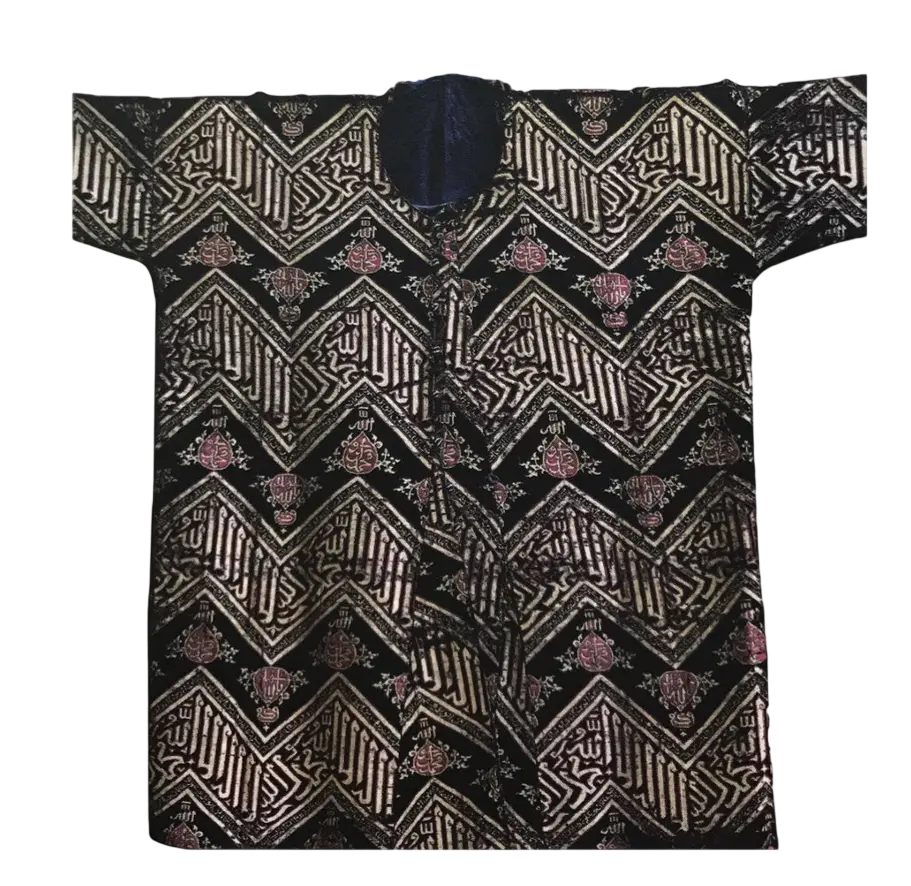
During the Ottoman period, the old coverings were brought to Istanbul, and some were given as gifts to important figures. These pieces were used to make items such as caftans and mushaf bags.

During the Ottoman period, the old coverings were brought to Istanbul, and some were given as gifts to important figures. Items such as caftans and mushaf bags were made from these pieces, or they were hung on walls as plaques. Some were sent to the sacred relics section for safekeeping, hung in tombs, or covered the sultans’ coffins.

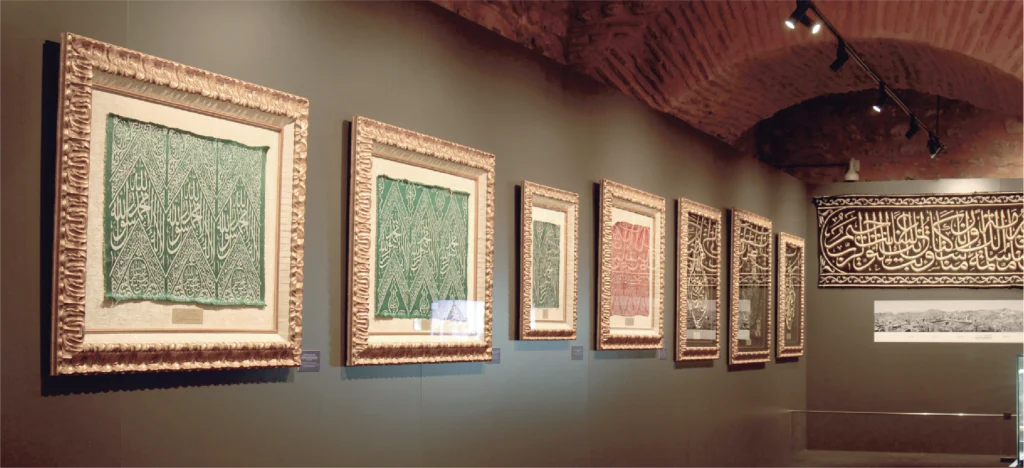
THE COVERINGS USED FOR THE KAABA AND THE RAVZA TODAY

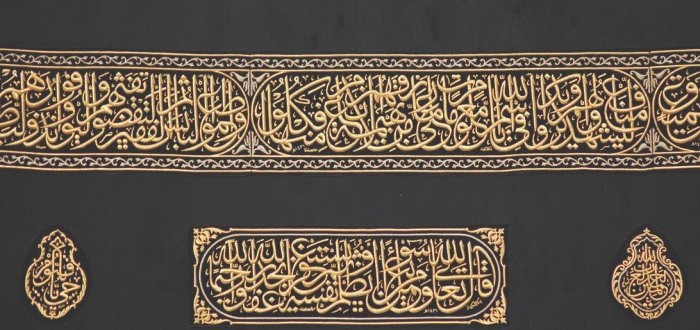
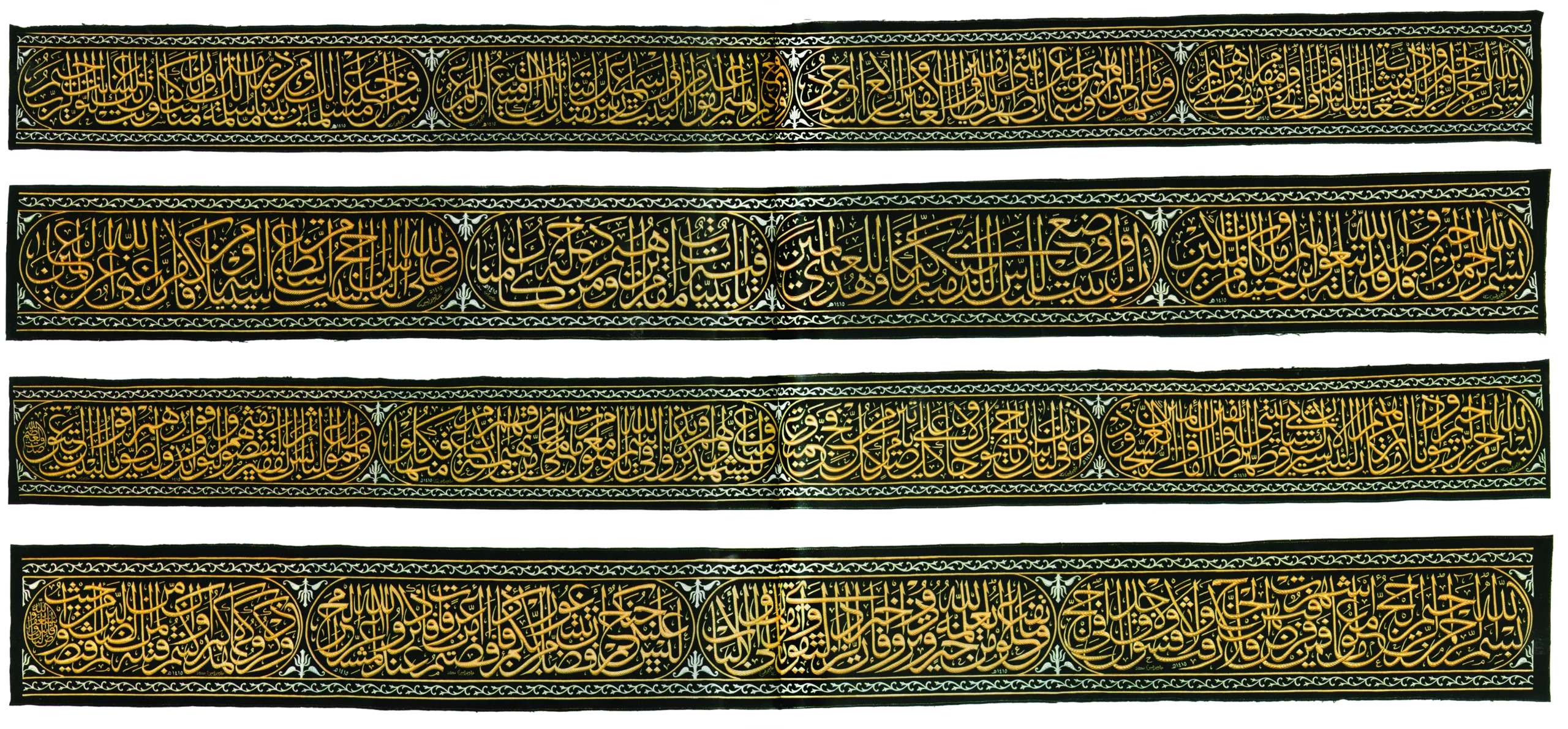
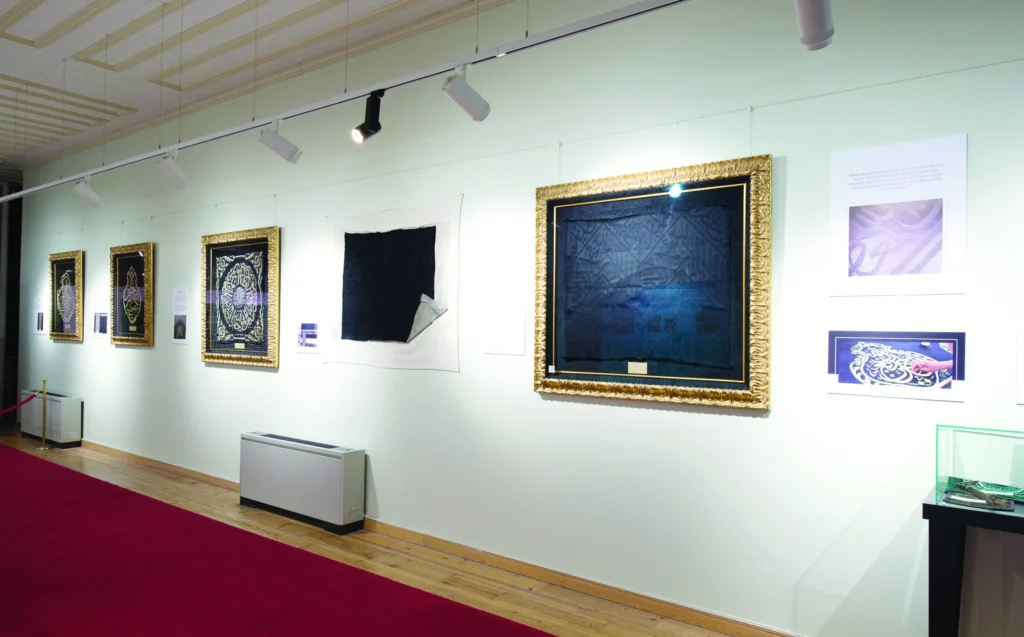
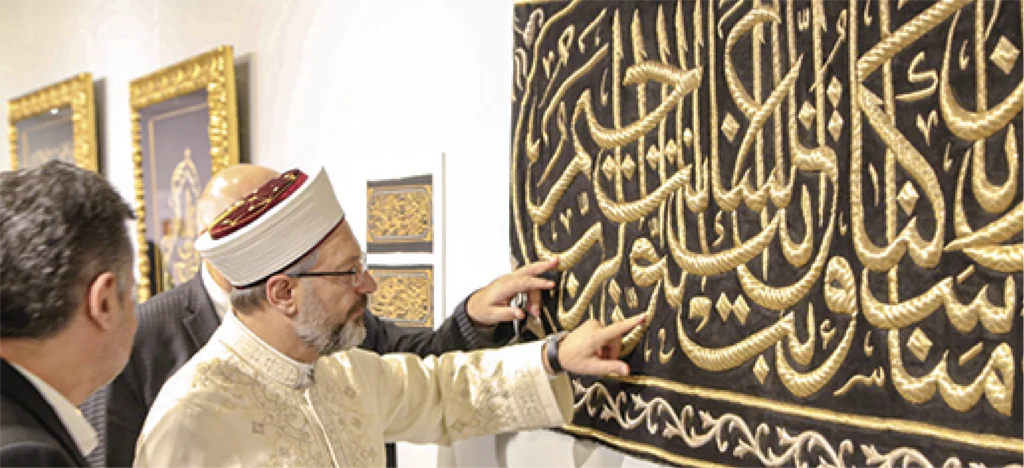
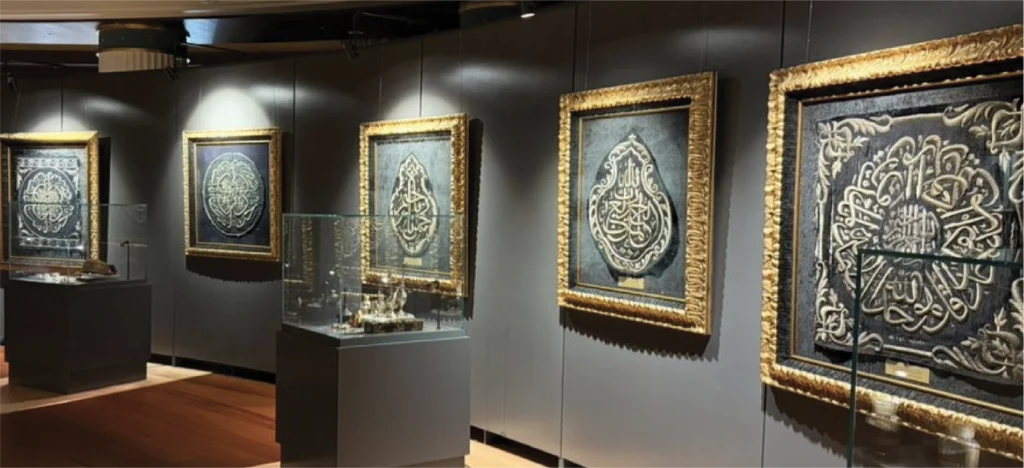
INSCRIPTIONS FROM THE KAABA BELT VERSES IN BELT FORM (Gold-plated silver thread)

THREE SEPARATE INSCRIPTIONS FROM THE KAABA BELT IN THE FORM OF “KANDIL”.
(Gold-plated silver thread)

From the Kaaba Belt Inscriptions: “Samediyye” Surah al-Ikhlas
(Gold-plated silver thread)

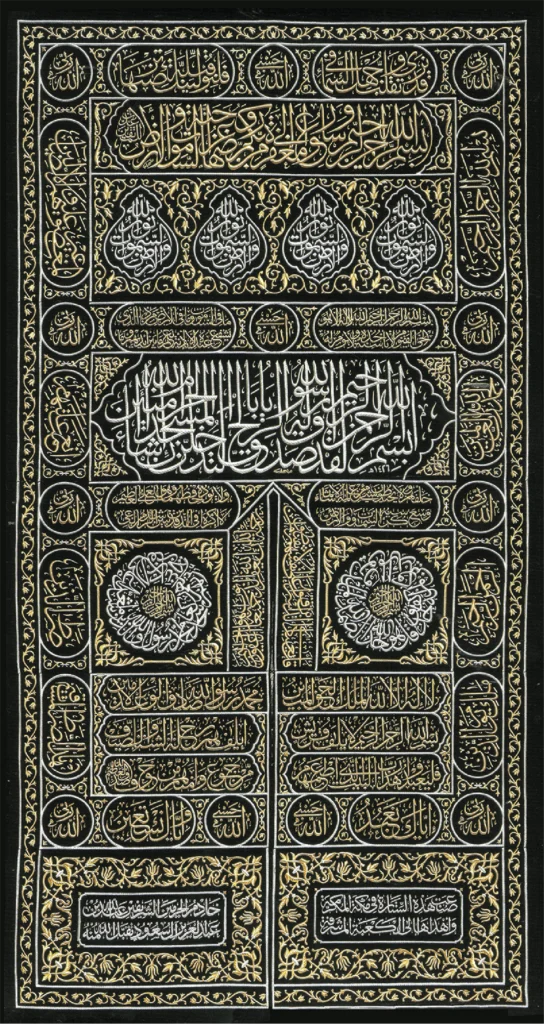
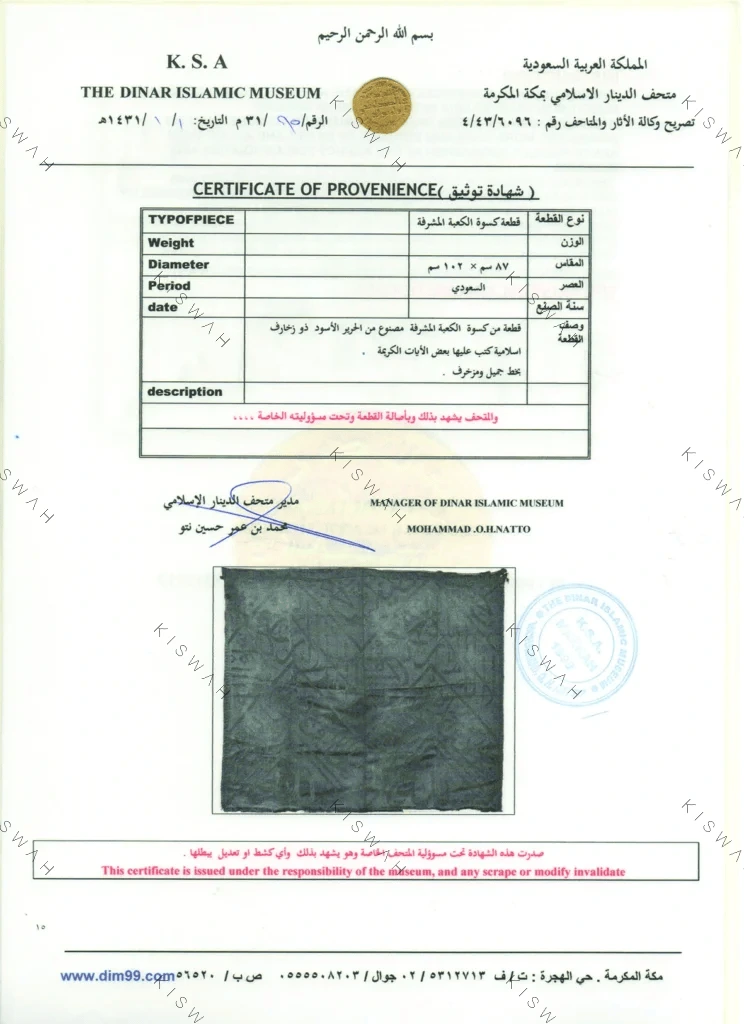
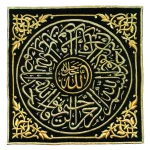
KAABA EXTERIOR COVERING (Black silk)
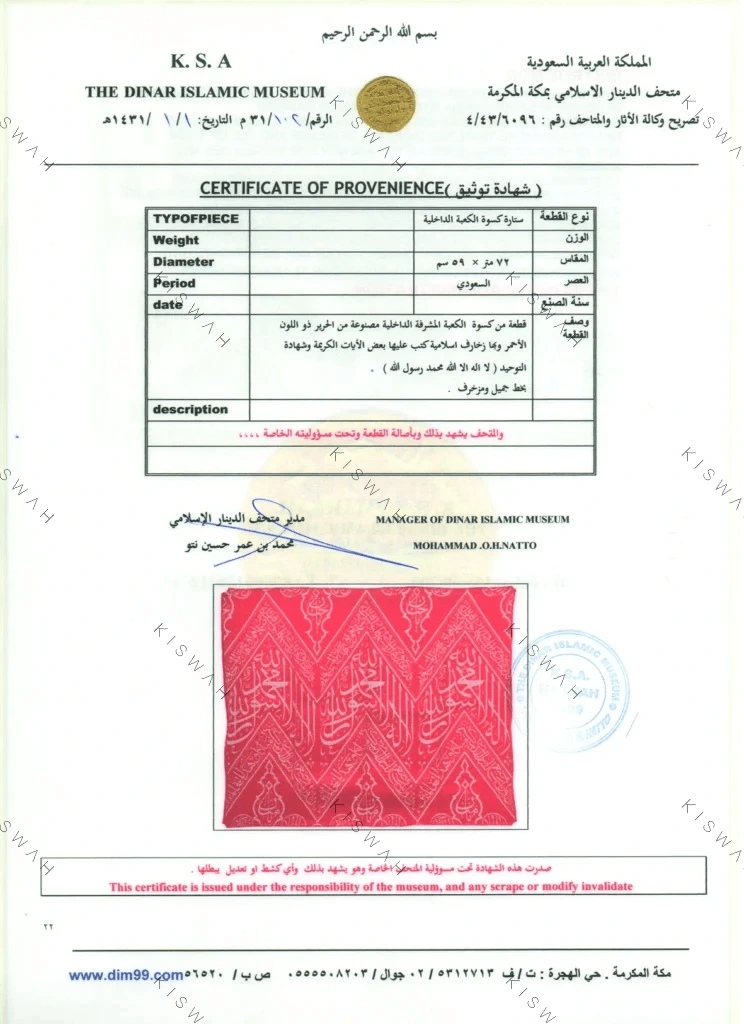
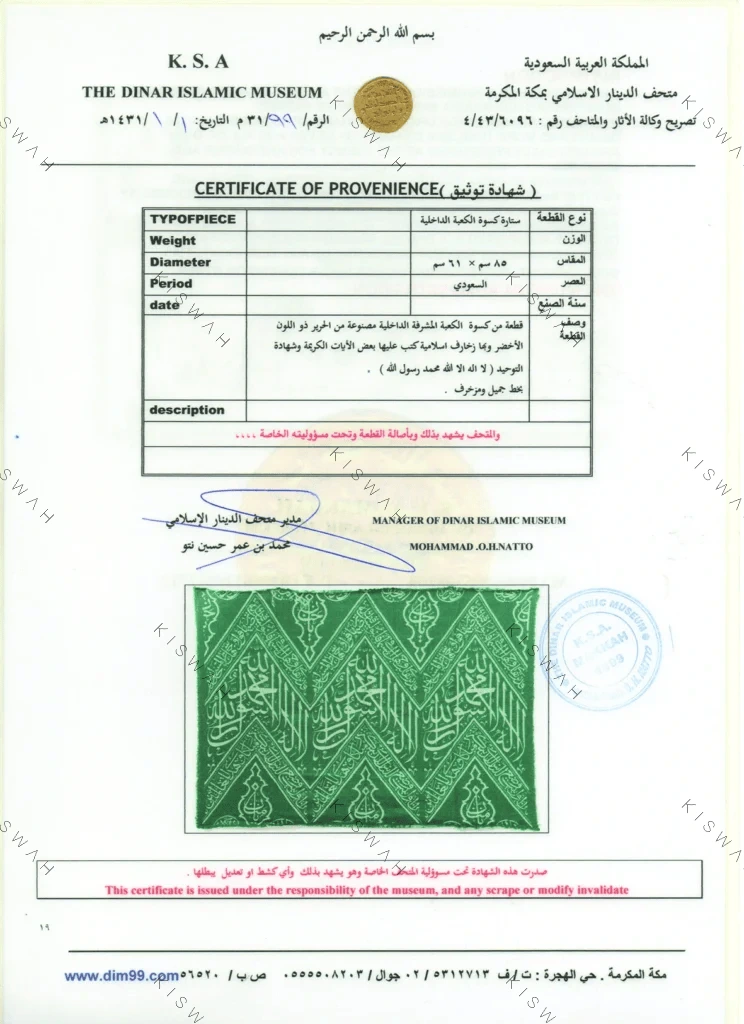
INTERIOR COVERING OF THE KAABA (Green silk)
RAVZA TOMB WALL COVERING (Green silk)
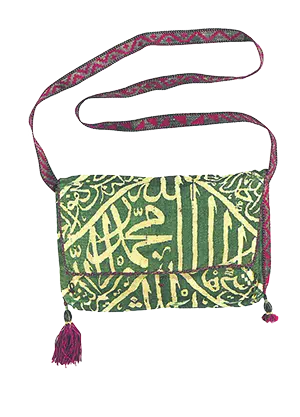
KEY POUCH FOR THE KAABA (Green silk with gold plating silver embroidery)

HOW DO WE OBTAIN THE KAABA COVERS?

My interest in collecting Kaaba coverings, which began in 1991, continued throughout the 24 years we spent in Saudi Arabia. Over time, I purchased pieces of Kaaba coverings that had been gifted to important figures by Saudi state officials, building up a rich collection of Kaaba coverings. In addition to Kaaba coverings from the last 60-70 years of the Saudi era, we also endeavored to collect Kaaba coverings from the Ottoman period. Ottoman-era Kaaba coverings are quite rare and therefore difficult to obtain.

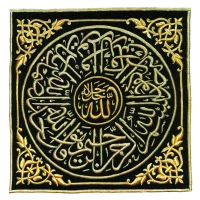
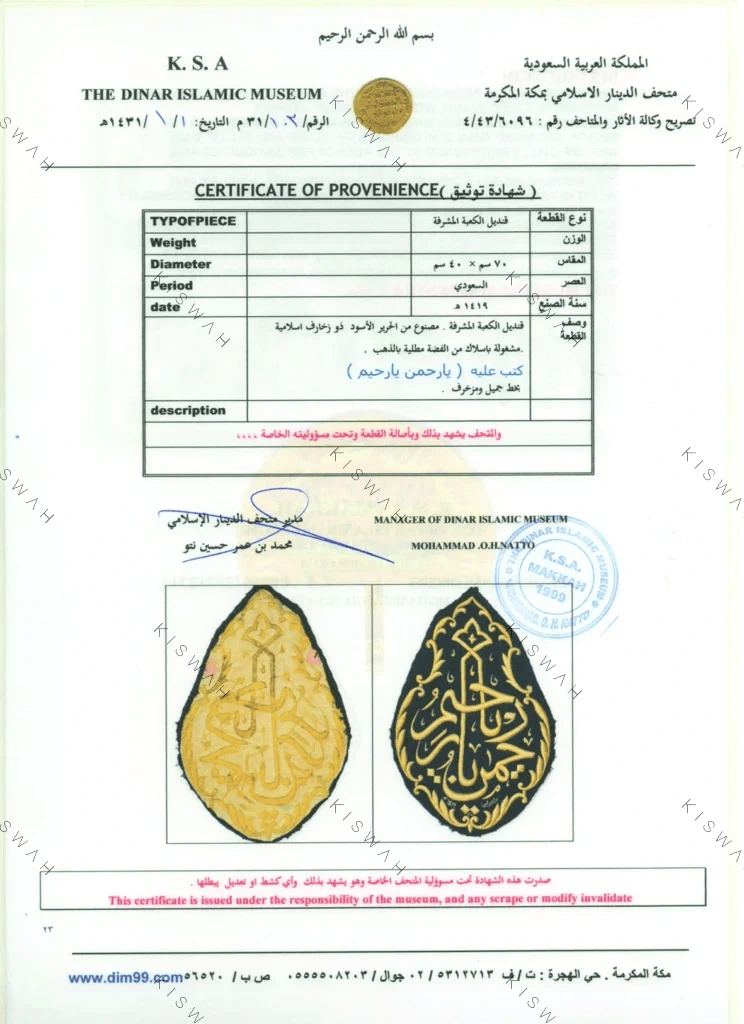
The authenticity of our Saudi-era coverings has been certified by the Mecca Islamic Dinar Museum.

BEKİR KANTARCI

KAABA COLLECTION

Alongside the Kaaba coverings, our collection of Ottoman-era Kaaba memorabilia,
Surre procession items, pilgrimage gifts, etc.,
KAABA COVERINGS AND MEMORABILIA FROM THE PILGRIMAGE ROUTE
was presented to the public under the title of the exhibition.

EXHIBITIONS

The Kaaba Coverings
and
Sacred Trusts on the Path to the Kaaba
Exhibition

Yalova City Museum
May 28-31, 2019

Rüstem Paşa, Cumhuriyet Cd. No:1, 77100
Yalova Merkez/Yalova

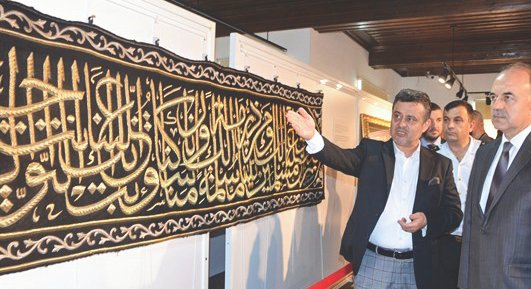
Kaaba Coverings and Kaaba On The Road Memories Exhibition Yalova City Museum 2019

- krayesh bi gaarib_0003

THE KAABA COVERS
and
MEMORIES ON THE PATH TO THE KAABA
EXHIBITION

Bekir Kantarcı Private Collection

November 8 – December 31, 2019
Visiting Hours 10:00 AM – 6:00 PM

Merkez Neighborhood, Silahtarağa Street No:12
Bahariye Mevlevihanesi (Opposite Eyüp State Hospital)
Eyüp / ISTANBUL

The Kaaba Coverings and Memories of the Kaaba Exhibition Istanbul Bahariye Mevlevihanesi 2019

Kaaba Coverings Exhibition
Esenler Municipality 2022

el kabe el muserrefe_0019_1-1

THE KAABA COVERS
and
MEMORIES ON THE PATH TO THE KAABA
EXHIBITION

Bekir Kantarcı Private Collection

April 11 – May 1, 2022
Visiting Hours 8:30 AM – 12:00 AM

Esenler Belediyesi

ESENLER MUNICIPALITY
KADİR TOPBAŞ CULTURAL AND ARTS CENTER

Kaaba Coverings Exhibition
Esenler Municipality 2022

Exhibition on the Road to Mecca
PRESIDENTIAL NATIONAL LIBRARY

BOOK

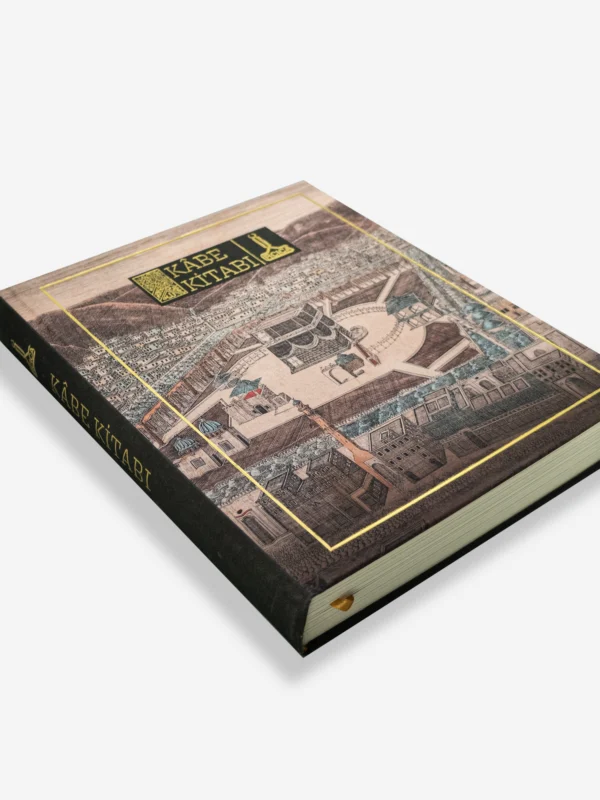
Kâbe'nin tarihini, mimari restorasyonlarını ve kutsal örtülerin (kiswah) gelişimini anlatan ciltli prestij kitap.

Kâbe Kitabı - Ecdadımızın Mukaddes Hizmet ve Sanat Hikâyesi

$90,00

Add to cart

The Book of the Kaaba

Editors: Sevgi Ağca Diker and Cengiz Tomar
Publishing directors: Hasan Mert Kaya and Bekir Kantarcı
Coordinators: Halil İbrahim Uçar and Burcu Karataş
Photographs: Mustafa Yılmaz
Foreword: Mahmud Erol Kılıç
IRCICA; 2025; 435 p.: ill. (Turkish)

EXPLANATION

IRCICA is pleased to publish this unique study and catalog on the history of the Kaaba, the holiest site on earth for Muslims, and the services and artistic traditions that have developed around it throughout history, and to present it to readers as of Ramadan 1446/March 2025. The work, which includes a richly illustrated and annotated catalog of Mr. Bekir Kantarcı’s special collection of Kaaba coverings from various centuries and of various sizes, compiled over a period of thirty years, features articles written by experts in the introductory section.

Most of the coverings featured in the catalog date back to the 20th and 21st centuries during the Saudi era, while others belong to various centuries of the Ottoman period. When replaced with new ones, some of these coverings were stored in palaces and museums or distributed to pilgrims, and this catalog brings them to light. The articles in the first section cover the history of the Kaaba from pre-Islamic times to Islam, the repairs it underwent during the Islamic period, the services rendered to the Kaaba and the Harameyn foundations, the sacred relics belonging to the Kaaba, the use of the Harameyn coverings in the Ottoman period and before the Ottoman period, the sources and works of art in which they are depicted, and the history of the Kaaba coverings in the Saudi period. The authors of the articles are Prof. Dr. Adnan Demircan, Prof. Dr. Hülya Tezcan, Prof. Dr. Hasan Fırat Diker, Dr. Sevgi Ağca Diker, Dr. Seyit Ali Kahraman, Dr. Selin İpek, Zeynep Çelik Atbaş, Dr. Tuba Kurtuluş, and Mohammed H. Al Mojan. The work, first published in Turkish, is planned to be published in other languages.

TOP
Best Sellers:
My Cart 0
RECENTLY VIEWED 1